
A. N. Wilson’s Jesus
An Interview with Paul Holmer
Setting: The Saint Paul Hotel, Grill, Saint Paul, Minnesota, 12:00 Noon
“The religious life is more complicated than these guys want to admit.” — P.H.
CARLSON: Last summer when we were coming back on the pontoon boat from an island on Bay Lake I asked if you had read the new biography of Jesus by A.N. Wilson. I want to follow up on that conversation. You did read the book, didn’t you, Paul?
HOLMER: Oh, yes, I did.
CARLSON: What did you think of it?
HOLMER: Well, you know it’s nicely contrived and lots of impressive scholarship materials are integrated into a lovely narrative. That’s the strength of the book. The weakness of the book is an entirely conceptual matter. Wilson’s not as good on the conceptual difficulties this kind of material reflects and involves. I liked a lot of it because it goes over very familiar materials in the quest for the historical Jesus in the last 100 years. There are many, many references to the sort of standard moves in the history of the New Testament scholarship that even I, as an outsider, appreciate. I’m not a professional historian but I’ve read about these things. He goes over this scholarship and he develops a nice story of his own, but conceptually it’s really lacking.
CARLSON: Paul, what exactly do you mean by conceptual difficulties? I also wonder how much as a philosopher you’re interested in any quest for an historical Jesus?
HOLMER: Well. . . an example of what I mean about conceptual problems would be if you think about the way we use the word “history” — there are two uses. One is a kind of adjectival use, we say something is historical and we mean that the person or institution existed, so then it’s historical. It’s an historical fact that the author of Alice in Wonderland, Lewis Carroll, existed in such and such a time. He was historical. But Alice herself is not historical. She never existed. Now Wilson keeps saying that Christianity is historical, but then he immediately leaps to the conclusion that because it’s historical you can solve important issues by questions of evidence. That’s the second use of the word historical. So then when I say that’s an historical matter, sometimes I mean when I say that, that you can settle the issue by looking up the facts. Now not much in the Christian religion can be settled by looking up the facts. In that second sense, Christianity is not historical. Now a great deal of biblical scholarship has been involved in this quest for the historical Jesus; meaning by that, the quest for evidence, I think that’s what most of these scholars meant. They’ve been looking for evidence in the historical records for what Jesus said and did and where he went and how tall he was and whether the crucifixion took place on such and such a date and place, etc., etc.
The first usage, it seems to me, is indubitable, that Jesus did exist. And Wilson affirms that he did exist. Secondly, whether you can solve any problems respecting him by citing historical evidence is dubious. I think it’s like this, that in respect to Jesus all the uninteresting facts can be settled by historical evidence but none of the interesting things, like whether he was the Son of God or Very God of Very God or the Savior. All the things that Christians have said about him, the big things, the seven creeds, the hymnody of the world, those aren’t subject to evidence and Wilson keeps saying that if they’re not subject to evidence they must be myths. Then we have another historical problem. Why move from the notion that it’s not historical in the sense of being resolved by evidence to saying that it is a myth? He lumps all that stuff together and makes a plausible story for the educated and half educated readers by not going into something that is simply tedious and hard-going, something which would cause most readers to stop reading.
CARLSON: Paul, is this book just warmed-up journalism . . . or is it really decent scholarship?
HOLMER: Wilson’s book is a second level academic work. It’s not the initial research itself. Therefore he takes, for example, a contemporary Jewish scholar such as this Geza Vermes, and gives him great credit as somebody who stimulated him. Well, Vermes is a kind of first-level scholar trying to assess the significance of phrases and words especially in the light of the Jewish tradition. And Wilson just comes along and reads this and tries to make use of it. I’m not accusing him when I say that, but this is really just high-level journalism. Or it’s like text-book literature in the academic world — accounts of what other people have said about so-and-so.
CARLSON: Didn’t Wilson lose his own faith in Christianity over time by thinking of these issues, wondering whether or not you can pin things down historically, worrying whether Jesus really intended to start a religion or whether it was just Paul’s work? Was it that after sifting through various scholars on this subject, doing his own studies in the Bible and cranking out his book he concludes that Christianity isn’t for him.
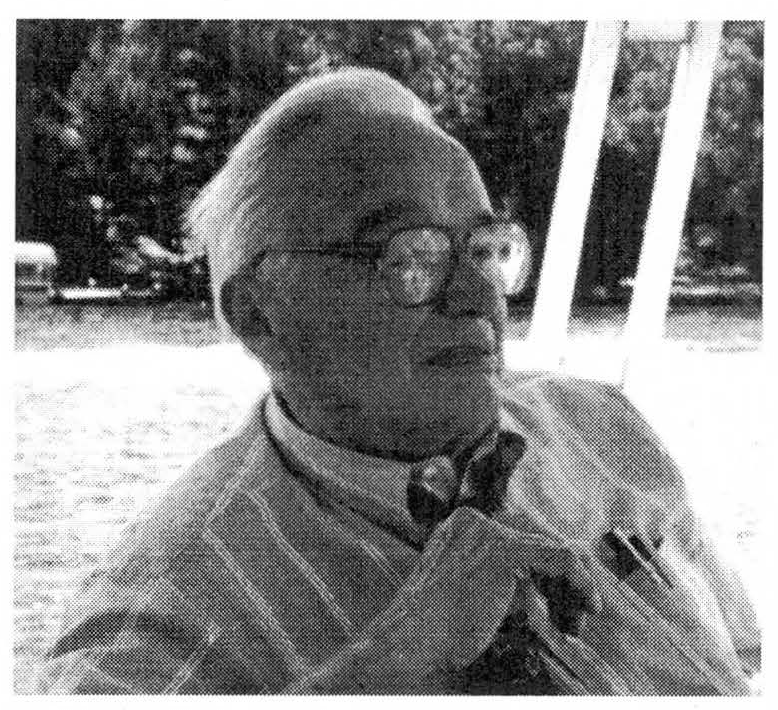
HOLMER: Yes, it’s very sad. The introduction for the book must have been written after the text was done and in a peculiar way it tells you something very pathos-ridden about his own life and, somewhere along the line, his own exposure to Christian teachings. If I may say so, it’s the sloppiness of Christian teaching in the churches and in popular religious circles that made him think that the whole thing is based on historical evidence because the story is historical in the first sense. He thinks that because it’s historical the issues respecting it are going to be resolved by historical evidence. He had discovered this literature in various learned circles starting with Oxford and the professors that he had in religion and so on. All the underpinnings of his faith have been knocked away one by one and he finally comes to the conclusion he has to throw it all out. Now if he’d read somebody with enormous conceptual skills, say like Wittgenstein in the Culture and Value book, it should have come out differently. Wittgenstein is very clear about this. He says explicitly that the ambiguity of the Gospels on historical matters makes us dependent upon our own faith. He doesn’t find the differences between John and the other Gospels decisive at all. That’s the sort of the thing that David Hume was so good at. Hume went so far as to say that from something historical one can never draw a conclusion on what we nowadays call a question of values, a question of personal significance.
CARLSON: Paul, I have to say that to me, Wilson seems very convincing and quite brilliant.
HOLMER: Wilson surprised me a bit because he’s so intelligent in his own books on Tolstoy and C.S. Lewis, which are quite good. He has a gargantuan intellectual appetite. He takes in everything, however, without asking questions of the intellectual scruples of what he’s taking at face value. Furthermore I think if you know something about the history of biblical scholarship, Renan’s book published in 1863, his Life of Jesus, for example is not the historical inquiry that it purports to be. When you know about Renan and the rest of his life, he is conceptually confused and sometimes confounded by the difficulty with some of these issues. Renan was trying to take a lot of religious issues out of the academic institutions and give them popular significance. He was a mediator like that, and then when he did it he really messed it up. There might be some things that ought to be left to the academic community — let them sweat it out. The religious life is more complicated than these guys want to admit. Wilson suggests that the religious life is posited on a series of assertions that are historical like Jesus being born in Nazareth instead of Bethlehem. He finds these assertions to be crucial. Yet it wasn’t until the 17th century that ministers even read the Gospels.
CARLSON: What kind of literary form is a Gospel? It’s certainly not a history book as we view history books now.
HOLMER: Wilson contends it is in a genre of its own and maybe he’s right. The Protestant tradition has made such a case for saying that the Scriptures and not least the Gospels are invariant truths and that they’re inspired by God. And they’re not questionable. That’s a dogmatic assertion.
CARLSON: Is that a Protestant idea?
HOLMER: Well, it seems to be there in the Roman Catholic tradition but they don’t make much of it. And Luther and Calvin and numerous followers made a great deal of it. Part of that arose from the fact that Scriptures were said to be, by people like Calvin and Luther, not just literary imaginative creations but figurative and symbolic and that they could be read literally. But as soon as they began to emphasize reading them literally then that’s a conceptual notion that suggests how to read. Once that was adopted then it quickly converted into the notion that Scriptures are logically unique by being both about matters of fact and also invariably true. A lot of the big churches put that into their confessions, like the Lutheran churches and the Calvinist churches and that produced a set of chaotic discussions. American Fundamentalism in the 1920s and 30s in this country was consumed with that whole issue of whether the Scripture was the literal historical truth. And in a way Wilson and the history of biblical scholarship fuss over that issue again.
CARLSON: A couple of other people have read this book and one friend of mine, a woodsman and graduate of Augustana College, only got as far as page 25 in the chapter on Paul. He said that you could tell at that point what Wilson is up to and here he suddenly lost interest. What do you think about Wilson’s treatment of Paul?
HOLMER: Well he’s sort of cavalierish. His notion is that Paul is the one who sorted out the pictures of what the Christian religion is by making Jesus the Son of God. He says a lot of things that Jesus doesn’t quite say about himself. And then he links that up with eternal existence and develops the idea of grace which is a Pauline notion. And if you get the grace notion into the whole Christian depiction then you have a way of separating Christianity from Judaism. According to Wilson, it doesn’t look as if Jesus separated his own sayings from Judaism. Once you claim that the quality of your life and your salvation doesn’t depend upon doing the works of the law anymore, but it depends on the grace of God — that grace as manifested in Jesus — now you’ve got a specific differential factor and that’s what Wilson says Paul introduces into the Christian corpus and the Christian literature.
CARLSON: Wilson will stay with Jesus as long as he’s a Jew, but he doesn’t like the idea that Paul took him into the Gentile world and wanted to overturn Judaism so people could become Christians. Does he say that?
HOLMER: Yes.
CARLSON: That first-rate scholar you mentioned, Vermes, doesn’t he have a book about Jesus as a Jew? I think that’s why Wilson likes him.
HOLMER: He thinks, following Vermes, that the evidence is on the side of saying that Jesus is a somewhat qualified Jew, qualifying himself but never differentiating himself as Paul does. He puts Jesus in a group of Jewish thinkers (which he is essentially) and treats him as if he’s just refocusing the law, not abnegating it as the Apostle does. Well, that’s a big question for us and not everything meant by Christianity is said by Jesus but Christians have known that for twenty centuries. Wilson makes much of that as though it’s something that’s inadmissible in the Christian tradition. But that’s not true. The Christian religion has known that.
CARLSON: Paul, don’t most people — the man on the street, and here I include myself — think that the commonly-cited events of, for example, the Christmas story actually happened? The same for the so-called Upper Room that began the Eucharist tradition. I was surprised in reading Wilson’s book to learn that there are some tremendous gaps and questions in what I had thought was a little less mysterious historically.
HOLMER: What Wilson says in his preface is that you need to add a “perhaps” to every assertion he makes. He seems to think his “perhaps” and uncertainties are mitigated by a consensus of biblical scholars. I don’t think that this consensus is anywhere near as large as he thinks it is. Furthermore, he never cites at all the conservative tradition. The conservative tradition is numerically extremely strong. I don’t know what to make of some of these conservative traditions myself because I’ve never been formally a part of most of them. Fundamentalists are also studying the Scriptures assiduously. They know their Greek and Latin and Aramaic and Hebrew and so on and they are doing word studies and event studies. This too has been going on for a long time. The “consensus” that Wilson alludes to looks a little bit propagandistic. It’s so Oxford and Cambridge oriented. It would be like saying in America because there’s a consensus going at Harvard, Yale and Chicago that nothing else matters. That isn’t true at all. There is this large conservative position and it sometimes includes Reformed, the Lutherans and various American Fundamentalist groups. Wilson doesn’t allude to any of that.
CARLSON: Renan and Schweitzer wrote years ago. Has the new material more recently uncovered after World War II, for example, the Dead Sea Scrolls, added anything to the historical search?
HOLMER: Wilson seems to think so, but I don’t think the Dead Sea Scrolls have added that much to this discussion. Wilson was a literary historian about the Dead Sea Scrolls. He thought the Dead Sea Scrolls justified the truth of Gnosticism. Any references to Jesus were very tangential.
CARLSON: Paul, I don’t really follow a lot of books about religion, but once in a while something comes along which catches popular attention like J.A.T. Robinson’s Honest to God which I read in college. Also, somewhere along the line I took a very glancing look into Rudolf Bultmann. I noticed in Wilson’s book that Bultmann is cited as saying that Christianity is all a myth, and that this is fine, that you don’t have to look at history. Is that Bultmann’s point of view?
HOLMER: Bultmann’s contention is that if you demythologize and take the myth out, you get to the heart of the matter. Now what constitutes the heart of the matter he’s never quite clear about. It’s pretty much the essence of the Gospel of John, because the Gospel of John is the least historical of the Gospels.
CARLSON: I get the idea that Wilson is an excellent researcher and writer and if he wanted to turn out a book on Mozart, a biography of Mozart, he could pull all kinds of materials together and probably figure out what Mozart died from and give other mysteries in his life some real illumination — whether he had Bright’s disease or whether he was poisoned by Salieri. Or did his wife do him in? And he could come out with a book that might be on the best seller list and one that has all kinds of interesting things to say.
HOLMER: Oh, sure, he’s clever. He could also do a book on Soren Kierkegaard and he’d do a better job than most people.
CARLSON: Kierkegaard, though, would not have been rattled by Wilson’s thesis if he had read his book?
HOLMER: Kierkegaard, in his Philosophical Fragments, published in 1844, develops an analysis of what kind of evidence we have to have in order to establish the notion that Jesus is God, the Son of God. He contends there is no such thing as evidence for that type of assertion.
CARLSON: Paul, I have heard about another acquaintance of ours who read Wilson’s book and was troubled. He even asked some people to pray for him because he thought part of his Christian foundation was pulled out from under him. That’s one of the reasons I read the book, to see what was going on. And Wilson hasn’t exactly strengthened my faith either.
HOLMER: There’s a case in point. Because what Wilson doesn’t ever make manifest — that someone like Kierkegaard is very clear on — is that faith is objective uncertainty held together with a passionate subjectivity. He says the awareness of the object of uncertainty plus subjective passion constitutes faith. People have been mistaught through the centuries. They’ve been taught there’s an objective certainty that lacks the passion. So Wilson himself thought there was objective certainty and it’s all been knocked away from you — and then he’s left. . . I don’t know what he is, some kind of a college agnostic, a typical academic-like person.
CARLSON: Dear me!
HOLMER: If he had just read more, and thought more about this, he could have seen that this is the sort of thing that Pascal saw — that faith involves an enormous uncertainty. People who use the objective uncertainty like Montaigne, his own contemporary, writing all those nasty essays about the breakdown of religion and stuff, all on the basis that the objective certainties of the Christian condition were lacking, are wrong. Pascal thought they never were there. And they weren’t there for the first disciples. They were always uncertain of things. And that the uncertainties are also manifested in the Old Testament. Also Wilson contends that it is the Apostle Paul who invents the notion of Communion and the Mass. That’s a little exaggeration but there is the case that the early Christians were doing what Jesus commanded they should be doing in memory of Him having this Last Supper. Wilson says that Jesus didn’t seem to be creating the Mass and there is no indication that he was creating the Mass, which is probably true. There is no evidence but Wilson’s notion is that once this is dislodged the Mass loses all its significance. I think the Apostle Paul saw that Christians were already commemorating that last meal, and now in reasoning about that he says that Jesus is saying “this is my body and this is my blood” and this constitutes a striking point. What Christian doctrine does is to pick up these Christian practices like baptism and the forgiveness of sins and the confession of sins, and the doctrine is not the cause of the practice. The practice is there and then the doctrine is the description of what the practice already is.
CARLSON: Thanks, Paul, for sharing your critique and insights. It’s been pleasant to have lunch with you again, looking out the window across the park from downtown St. Paul’s handsome Ordway Music Theatre where I see you at so many concerts. Could you say something about your interest in music over the years? And would you and your lovely wife, Phyllis, like to go and hear Alexander Solzhenitsyn’s son, Ignat Solzhenitsyn, a pianist, in a solo recital next week? I have two extra tickets to this concert.
HOLMER: Yes, I would like to hear young Solzhenitsyn. I attend a lot of concerts each year. I’ve been doing that all my life because I like it so much; it’s primarily liking — I don’t go to be instructed; I go to be amused.
WAITRESS: Would you like something for dessert today? Our special today is fresh gingerbread?
CARLSON: That would be fine, and I’d like a cup of cappuccino.
HOLMER: I’d like the burnt cream and a cappuccino.
CARLSON: Paul, one last thing. It’s a bit noisy in here and this tape recorder is not too hot. If I get your thoughts down in some inaccurate fashion, it’s certainly not your fault. Perhaps any questions could be cleared up in some future column of the Pietisten’s regular Letters column.
HOLMER: That would be fine. Thank you very much for this lovely luncheon.